
Tomiko Dixon Interview
"Granddaughter of the Blues“ Tomiko Dixon Walks the Walk
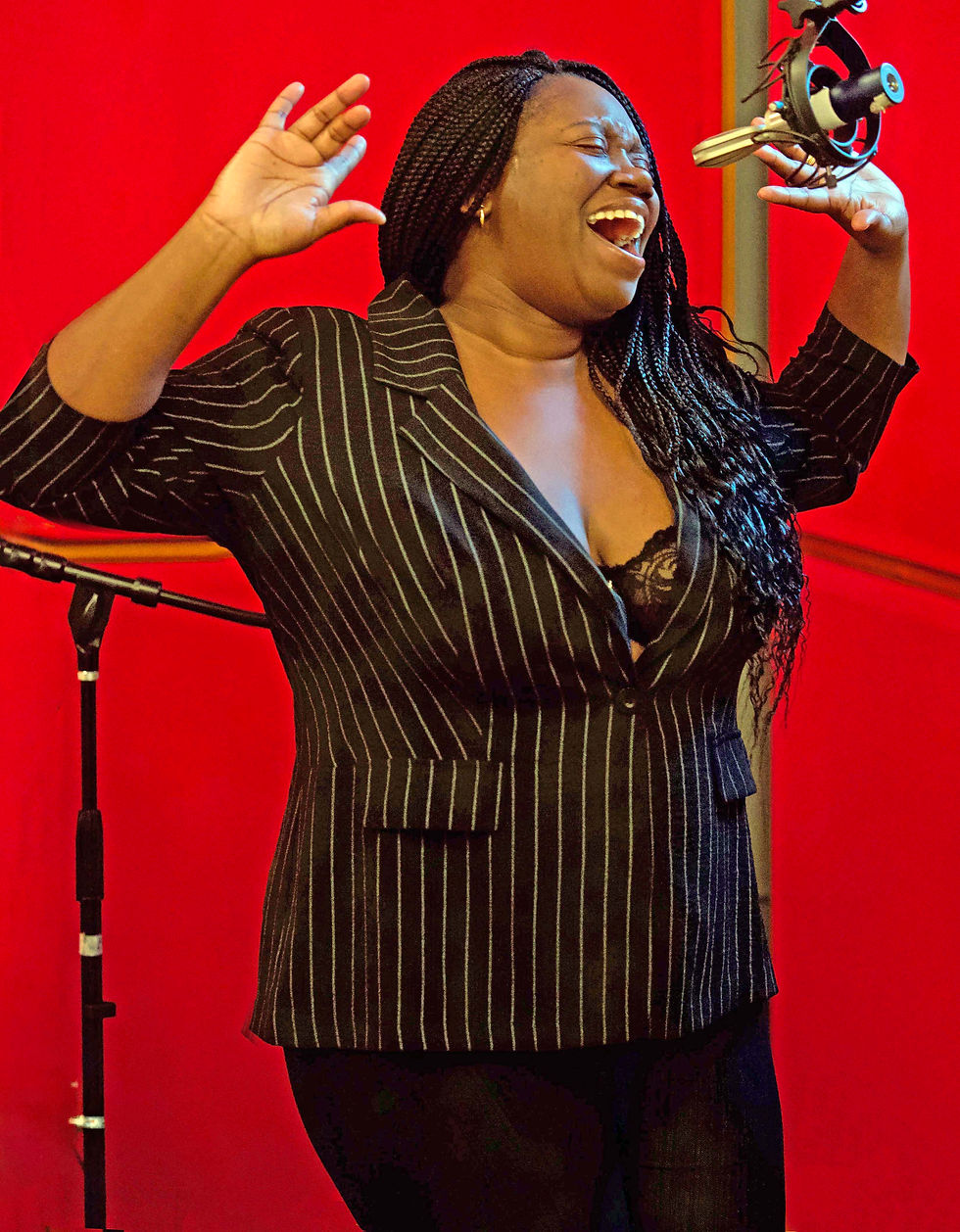
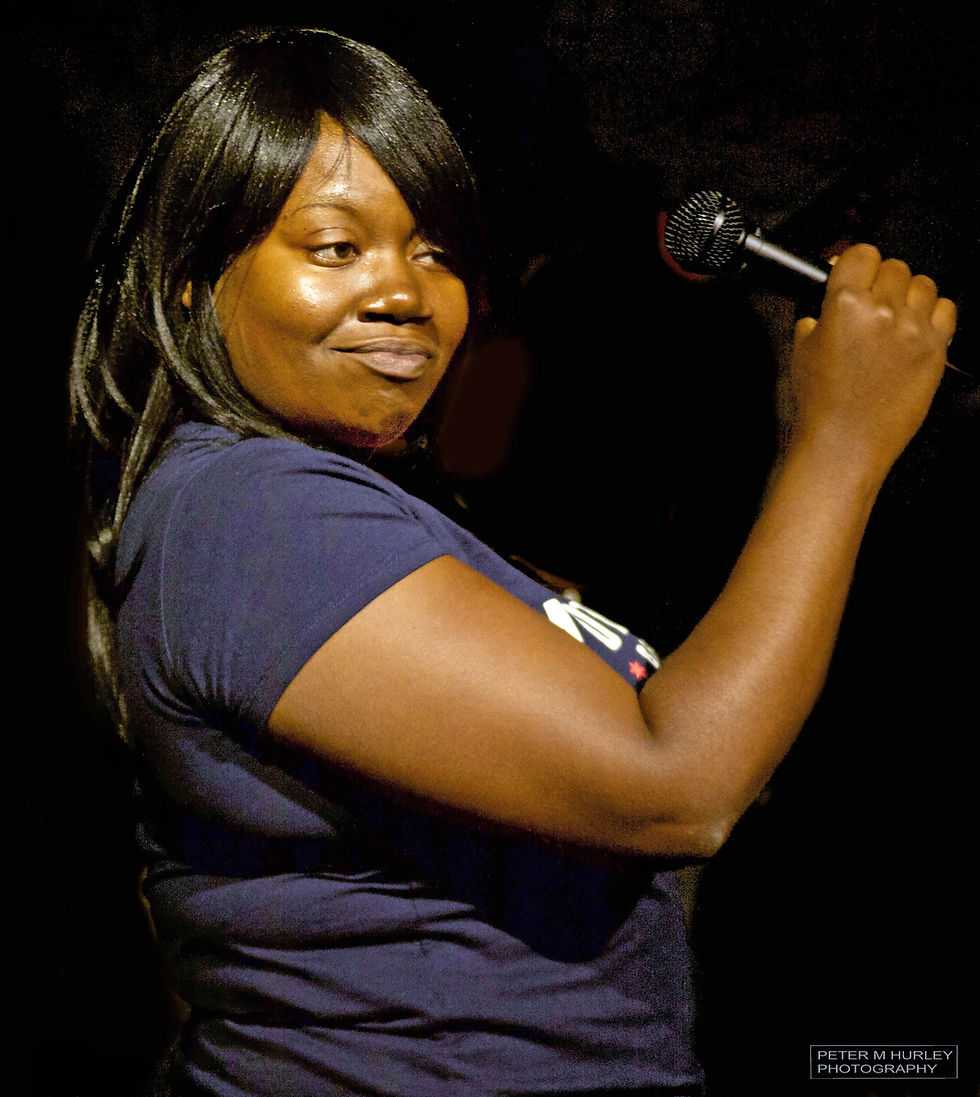
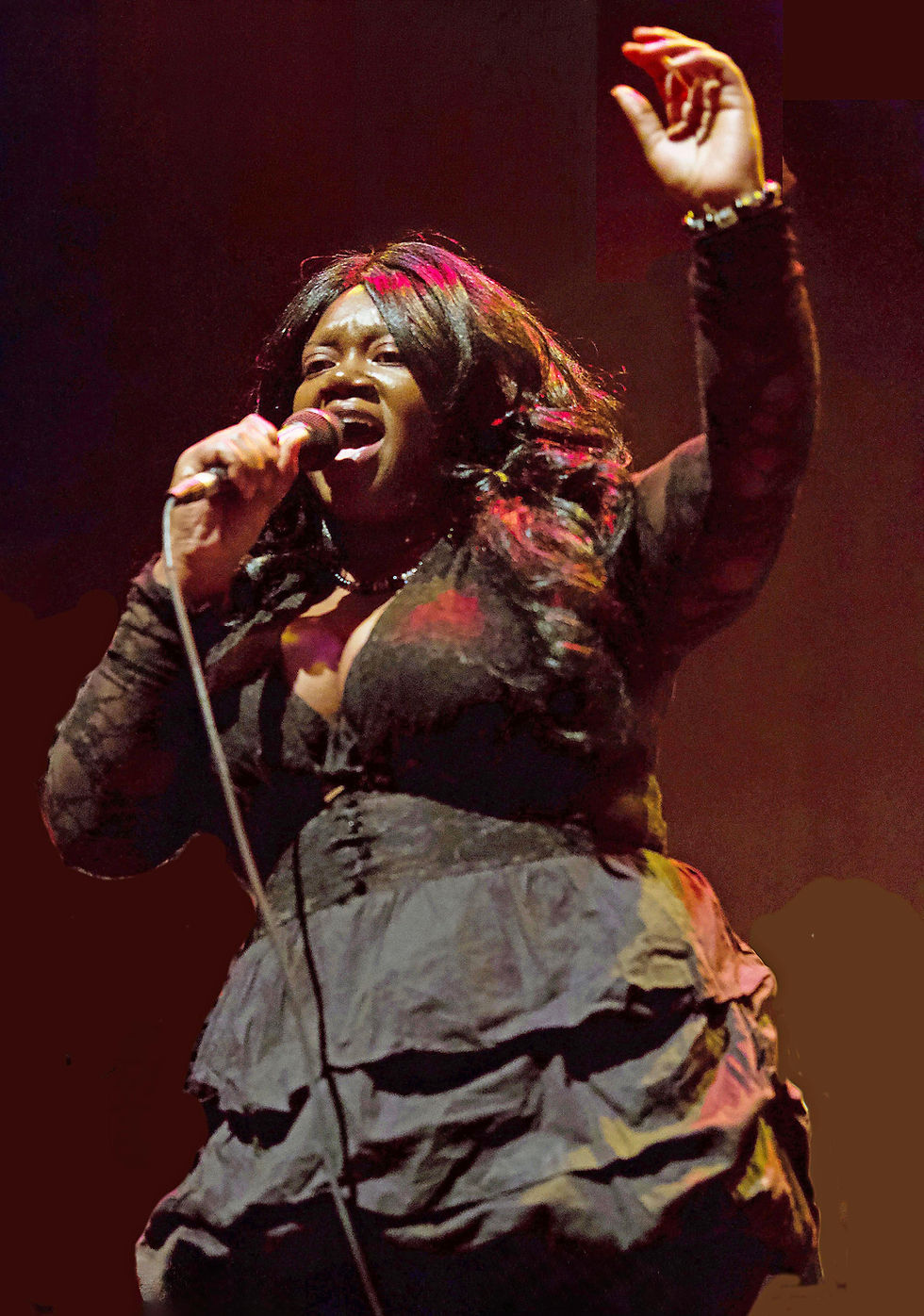
The woman is brilliant, prepared and fired up. Granddaughter of the Blues, Tomiko Dixon, is running hot and ready for what comes her way. The talented singer, songwriter, producer, publishing company owner and career consultant forged this path for herself with experience, smarts, guts, and making the most of the gifts passed down through her grandfather, the legendary songwriter/bassist/producer/A&R man Willie Dixon.
“Well, they say that “The apple doesn't fall far from the tree,” says Ms. Dixon with all the forthrightness she can muster.
Story and Photos: Peter M. Hurley

Photo: by Peter Hurley
By Peter Hurley
I first met Tomiko at curator Lynn Orman’s inaugural Women of The Blues: A Coast to Coast Collection photography exhibit on display at Firecat Gallery in 2016. Ms. Dixon’s infectious personality makes a strong impression. A few years hence, we collaborated by co-producing a single release, “The Real Thang,” and authored by myself, Tomiko and bassist Larry Williams. Tomiko took the original lyrics intended as an homage to her relationship with her grandfather and morphed them into an epic anthem that name-checks over a dozen historical blues artists. By doing so, she wisely gave the song a universality, celebrating the blues in general. Brilliantly arranged, the song begins in a soulful groove with a moaning harp that builds to an aching pause then kicks in with a thumping drum cue unleashing an upbeat clarion call to party until the song’s rousing finale. Canadian Blues artist Gary Martin, nephew of Howlin’ Wolf’s longtime guitarist Hubert Sumlin, loved it so much he chose to cover it for his first single as a solo artist.
We connected on the phone a few days before the Aug 16th Chicago Blues Hall of Fame induction ceremony at Buddy Guy’s Legends, co-produced by Tomiko, Marcil Maddox , Buddy Guy’s Legends Chicago, Dan Marolt & United Charitable.
PETER HURLEY: Let’s get to know you a little better, Tomiko. You often speak passionately of your dedication to keeping the blues alive as a tribute to your grandfather, Willie Dixon, one of a the most monumental contributors to blues music, and thus American music and social history. Tell us about connecting with Willie’s legacy at a young age. Can you share your early relationship with him? There’s a lovely photo of the two of you when you were a child. One can feel the affection beyond the physical resemblance between the two of you.
TOMIKO DIXON: Growing up, my grandfather was my anchor, functioning as a father figure who instilled in me the foundational values of education, uncompromising integrity, and an enduring work ethic. Though I was too young at the time to fully grasp the depth of his guidance—including his early lessons on being a steadfast sounding board—I now recognize that he saw potential in me long before I could see it in myself.
He was a remarkably compassionate and humorous man, and I miss him dearly. As the years have passed, I have come to deeply appreciate the profound personal sacrifices he made to shape his own life and uplift others. That hard-earned wisdom and legacy of service command my utmost respect, and they serve as the driving force behind my life's work today. Keeping his memory and the enduring spirit of the blues alive is not just a passion; it is a responsibility I am deeply honored to carry forward.
PMH: Tell me again who it was that asked you up on stage to sing the first time?
TD: Billy Branch was the first one. My Uncle Kheti Gamba took me down to Artis’s Lounge on Chicago Avenue. I sang “Wang Dang Doodle.” I must have done okay because Billy and Rosa (Branch) told me to just keep working on it. I had something there, but I just needed to keep working on it, is what they told me. My Uncle Kheti later became my manager. I have two managers: Kheti and Tim Price.

Willie Dixon and the Chicago Blues All Stars:
L to R. Freddie, John Watkins, Butch Dixon, Willie Dixon, Billy Branch, Jimmy Tillman
PH: And that performance really inspired you to carry on with it?
TD: Yes, it inspired me because so many people loved it. So much so, that for the 2015 Chicago Blues Festival’s Tribute to Willie Dixon and Muddy Waters, I was asked to participate as well. DCASE (Department of Cultural Affairs) had already put the show together but, at the last minute, they added me. I'm so grateful to Jeneene Brown-Mosley, for her involvement in that. And I believe it was Barry Dolins and Bruce Iglauer who told them, “Willie’s got another granddaughter out there and we got to have her on this festival.” So, it was all three that had a hand in it.
PH: So, you were covering your grandfather Willie Dixon’s songs in the beginning? When did you start writing your own songs? Our readers should know that you are extremely prolific at it; 700 songs to date. At what point did you realize you wanted to expand your singing talent into songwriting?
TD: To tell you the truth, I started writing the day I left Artis's Lounge on stage with Billy Branch.
PH: That soon?
TD: Yes, because I noticed that I was trying to sing “Wang Dang Doodle” just like Koko Taylor. And I was like, well, I'm not Koko Taylor, I'm Tomiko Dixon and I need to write some songs for myself!
PH: That was a quick realization and ignited your innate creative flame.
TD: Yeah, so I used my grandfather's “Spoonful” song, and I created a song titled “A Piece of That Pie.” I used the same timing, the same number of words, the same 12-bar blues, and I created that song.
PH: Perfect. You dipped into the wellspring of your own family heritage and used a Dixon masterpiece as a springboard for your own art.
TD: Yes.
PH: Speaking of Dixon classics and “Spoonful,” you mentioned to me in the last year or so that you recorded “Spoonful” for a compilation album?
TD: Not exactly. It's an album with a song featuring me and Will Johns, nephew of Eric Clapton and son of producer Andy Johns. It’ll be released in September on Will’s 6th album On Top of the World. I recorded my vocals at Rax Trax Studio in Chicago with producer/engineer Rick Barnes.
PH: Rax Trax and Rick with whom we did “The Real Thang!”
TD: That’s right. And that “Real Thang” session was something! It took off, didn’t it! It’s always a kind of full-circle-moment when people who knew my grandaddy or the relatives of those people get together with me and we do something. You can feel the blues carrying on.
PM: You’re extremely active in carrying on the legacy. You've also been involved in some other projects as well. I’ve heard some of your material on YouTube with A.I.
TD: In the last year or two, I've mastered A.I. and I have several, what I call reboots, out under my Grand Blues Music company. There were songs that I had out that didn't quite take off, so I remixed them using A.I., and to my surprise they're really taking off now.
PH: I notice you use both a male and a female voice in them.
TD: I pick whichever voice is more suitable. I think it's a great tool if you use it correctly. I don’t intend to replace musicians or my own writing. But it lends itself to what I'm doing because I’m primarily a songwriter and still use my own lyrics and melodies. You might say I use it for orchestration more than anything. I use it as a writing tool with certain voices in mind and will often take those arrangements to shop to singers that I have in mind, what we call a demo. I'm able to create all this great music and, when it’s time to record, I have session musicians & bands play it live. So, everyone's winning with it.
PH: Any pitfalls?
TD: I have not played around with letting A.I. completely make the song for me because I don’t need to, but I can see why people would be put out by that. I use my already copyrighted material and I sometimes create remixes. There are a couple to date -- “A New Day Arising” and “Angels or Demons.” Now people can go and listen to both versions and tell me which one they like the best and why. I also use this method to protect my creative work using A.I.

PH: In addition, you also came up with a song for the Chicago Bears for your Grand Blues Music when they were at their peak last season. The town was on fire, and you penned a great new Bears anthem sung in a male voice that sounds very right now.
TD: Yeah, the Chicago Bears song. That was actually from a song that I wrote called Sweet Home Chicago (Editor’s note: not Robert Johnson’s song with the same title.) like, about 15 years ago. I borrowed some of the words from it. It's still one of my top selling songs. Well, outside of “Power to the People” and the “Best of Love.”
PH: “(For God’s Sake) Give More Power to the People” is epic. It’s a collaboration with Chi-Lites founder, the great Marshall Thompson, right? It’s a glorious bluesy record and your vocal kills it. Please tell me more about how that song, your latest release, came about.
TD: Marshall Thompson is my godfather, and I’m blessed to have him in my life; he is a true inspiration and mentor. He goes way back, having worked with my grandfather. I was honored to record this song that was a hit for the Chi-Lites. It was on the same album that featured their other hit “Have You Seen Her.” It has a social message that is of course, still relevant today.
PH: That is such a beautiful record. Is Marshall on this recording?
TD: Yes he is. He's on there with me. That male voice that you're hearing in the chorus, that is my Godfather. Doctor, Hollywood Walk of Famer and Father of All Vocal Groups now don’t forget that part.
He always tells me, “Baby, you know your Godfather's got a star on the Walk of Fame. Everybody can't get that stuff.” (She laughs.) I'm so grateful he and Eugene Records’ Family let me cover that song.
He is the prime example of someone who loves the business, someone who’s evolved and, throughout time, stayed relevant through it all. That's why we are so close.
To me, it's beautiful to have someone here to help me, because my grandfather's not here anymore. Who else would I turn in the business to give me that guidance because you can't do everything on your own. And Marshall has really been there for me. As somebody I can trust, confide in and someone who’s going to tell me when I'm doing wrong but who’s going to celebrate me when I'm doing right. And, going forward, I’d like to be that somebody for a younger artist to carry on this tradition in music of mentorship.
PH: That’s love and guidance, yes, ma’am. The Chi-Lites were Chess artists for a while, were they not?
TD: Well, Marshall's uncle Marshall Thompson Sr., who was a drummer, was actually an artist over at Chess Records.
PH: Oh, okay. So did your grandfather, Willie Dixon, produce some of that or was he in on any of those sessions?
TD: Yes, they always worked together. They were good friends. Yeah, that's why Marshall adopted me. As a matter of fact, his exact words were “You know, growing up I had your Granddaddy right there with me and now you have me right here with you now. “ So, it's just history repeating itself.
PH: This has been a busy year for you. You’ve also been involved with a film soundtrack and have appeared in front of the camera.
TD: Yes I'm going to be in a movie Peter, an up-and-coming movie with director Christie Tate and actors Tre Patterson, Mocris Anderson, and many others called The Valentino Code. Special thanks to my God Brother Robert Money Kimp for introducing me and taking me to the open casting call.
PH: You play a small part?
TD: Yes, yes. I started out as an extra but later was asked and they decided to give me more talking parts. So, basically I was such a great extra that they decided to give me a talking role. (She laughs again.)
PH: Somehow, I can’t see you as a background person. So, was that shot in Chicago?
TD: It was shot in Chicago at the Grand Ballroom and other locations around town.
PH: And is it a period piece set in the ‘30s or ‘40s?
TD: No, it's up-to-date and it's going to be a series. Yeah, on Netflix , Tubi and beyond because most of their movies go out everywhere. I'm not for sure when it’s going to be released, but I know it's going to be sometime next year because we are still shooting.
PH: How did it feel to be in front of the camera?
TD: You know what? I was a little nervous, but they nursed me along very well and all the cast helped me. I really appreciate the opportunity to be a part of something like this. I never even saw it coming, actually.
PH: Then there’s a feature film from actor/writer/director Billy Ray Valentine, The Gangsta, that you wrote and produced a song for.
TD: Yes, I wrote the title track song called Gangsta for it. It’s kind of taking over, so…
PH: I’ve heard it on YouTube. It’s brilliant. When is that film being released?
TD: The Gangsta film had a premiere on the 20th at the Siskel and Ebert Theater in downtown Chicago. And Billy Ray Valentine is going to do a couple more premieres so stay tuned. Then it's going to hit television, I want to say, by the end of this year.
PH: I ran into Big Llou Johnson at the ’26 Chicago Blues Fest in June. I had to miss his “Annual Funraiser” at Buddy Guy’s during the Blues Fest week. Were you involved in that as well?
TD: Yes, Big Llou is from Chicago, so it's an honor for him, and then it's an honor for us to host him every year. We had a packed house, and we want it to continue to grow. We need more events and more blues venues for the artists and blues lovers, The more we have the better off we are. It’s very important to welcome creatives to come here to Chicago and do more things in the blues. And we want that all around the world. We want it how it used to be. There wasn't a corner of the earth you couldn't go to and catch a great blues show. That's what we want. We want to keep the blues going, keeping it vital and alive.

PH: And you want that for the Chicago Blues Hall of Fame as well. Can you talk a little more about it? What are your plans for it in the future?
TD: My plan is to make the Chicago Blues Hall of Fame bigger and better—the biggest thing in blues, which it already is. However, we just want it to grow with more sponsors and more people getting involved from all walks of life. You know, it's not just about blues. The blues are the roots of everything and we want everyone to celebrate it.
It’s for everybody. We want everyone in every capacity to help us keep the blues going by partnering with other musical genres and venues and creating more new great blues artists. I just do what I can to keep it going. Myself, Dan Marolt, United Charitable, Buddy Guy’s Legends and Marc Maddox. We're all working our tails off to keep the blues going. The blues belongs to everyone and we're going to treat it as such. Whoever wants to be a part of the blues and bring something positive to it, that's what we want. Open the gates. “For God's sake, give more power to the people.”
PH: Yes. Speaking of, that song has taken off. You gave it a bluesier edge to it than the original, you brought your Tomiko Dixon thang to it like everything you do. Are you in touch with Marshall Thompson as it climbs the charts?
TD: Yes, he called me this morning saying, “Baby, I see you everywhere. That's what I'm talking about!” He said, “Now it's time for you to go out and sing.” And I said, “I know, I know. “So that's what we're getting ready for now. We're going to make it through this Chicago Blues Hall of Fame Ceremony and then after that, I'm going to start putting together some shows and accepting bookings. I got some really big stuff coming up. Don’t want to drop it now but it's hot. What I can leak out is that I'm bringing back my very own Grand Blues Music Awards.
PH: And that will be devoted to local musicians and artists?
TD: No, no, no. Grand Blues Music is international. So it will be for all genres, the arts, international artists and the movers & shakers, all of that good stuff. I'm working on some things with a young man by the name of Bernard Goss & DuSable Black History Museum and Education Center.
PH: That's awesome. Sounds like your talents are reaching outward to so many things, not unlike your grandfather Willie Dixon who was an A&R guy, producer and player on so many sessions other than just blues, wasn't he?
TD: He was far more than a witness to history—he was its architect. Raynard Miner told me himself that my grandfather helped him make his pivotal move to Motown. Outside of The Blues and Rock N Roll, he also collaborated with icons like Joe Jackson, the Pointer Sisters, Ike and Tina and was said to be great friends with Quincy Jones, and Stevie Wonder, just to name a few. His reach spanned blues, jazz, soul, and rock and roll.
Beyond the studio, his greatest legacy was a fight for justice. When he stood up for the rights to his own music, he sparked a global movement. He tore down barriers, securing fair compensation, international touring rights, and artistic sovereignty so that Black creators worldwide could finally claim ownership of their genius and get paid.
PH: That's a long, hard fight he put up. And it's still going on, isn’t it?
TD: Yeah, so that's why they know him as the Grandfather of the Blues. And one of the founding members of Rock and Roll. Because I know that without my grandfather's role in history, I don't know how it would have turned out for a lot of these people. That’s why I just can't let his name be forgotten and no one should, for that matter. We should all do what we can to keep my grandfather's legacy alive. Because he did so much for everything and everyone. Even the generation that's here today, some of them don't know about him yet, But with publications like Chicago Blues Guide and others helping me to get the word out, they'll know where they came from. “You've got to know where you come from in order to know where you’re going.”
Half of those who wonder where they come from, I’m here to tell you “You come from the blues.”
PH: Anything else you want to mention as far as plans or thoughts about how your career is going?
TD: I am simply rolling with the flow, and I am embracing every single moment of it. By walking in readiness for whatever path God has laid before me, I am fully present in the now—honoring my grandfather's monumental legacy by keeping his spirit, his fight, and his music alive every single day.
PH: And you’re planning to turn your attention towards live performance more?
TD: That and more. Granddaddy didn't just walk the path—he built the entire road, moving seamlessly as a producer, songwriter, and musician. Today, I carry that exact blessing, and I lean into it with my whole heart.
I am standing in a space of true alignment—free to create without limits, fully embraced for who I am. But true purpose requires remembrance. I carry the blueprint of where I come from, and I honor every single person who has lifted me along the way, because without them, there is no Granddaughter of the Blues.
This isn't just about my journey. It is about the unyielding strength of the women in my lineage and throughout blues history who paved the way—my grandmother Elnora Franklin, my step-grandmother Marie Dixon, and my mother, Johnnie T. Dixon. Their resilience, alongside my grandfather's, forged a legacy of truth and power.
We fight to keep the entertainment industry a positive, transformative force because the world desperately needs that light. I am simply keeping my steps forward, lifting others as I go, and ensuring their spirits burn brighter than ever.
PH: Tomiko, if I wanted to go to listen to all your music, all in one place, where would I go right now?
TD: If you want to listen to it for free, go on YouTube. If you want to download it to support my mission you would go anywhere music is sold. Just Google Tomiko Dixon Music or ask Siri to play Tomiko Dixon Music and it'll give you everything that's available. My personal website is TomikoDixon.com.
Oh, and listen to your local and international blues radio stations. If you don’t hear my Music there, then feel free to contact them and ask them, “Hey, where's Tomiko Dixon music at? That's who I want to listen to.” Tell them you want to hear Grand Blues Music. Tell them you want all of it ‘cause I’m The Real Thang. (She lets go a hearty laugh.) And Long live the Blues!
Artist website: www.tomikodixon.com
About The Author: Peter M. Hurley is a photographer/writer/artist whose interest in Blues began as a young boy upon first hearing the distinctive and haunting Chess Records sound of Bo Diddley. Exposure to Little Walter, Junior Wells and Howlin' Wolf in later years led him to further discover more Blues originators. After many years as an artist, Mr. Hurley shifted his visual focus, bringing his painterly sensibilities to the art of photographing musicians in the throes of performance on Chicago Blues stages. Combining music and visual art goes to the heart of what he had felt growing up with rock 'n roll and then discovering its source: the Blues.


